New Construction Interior Design: Why Your Designer Should Be There Before the Walls Are
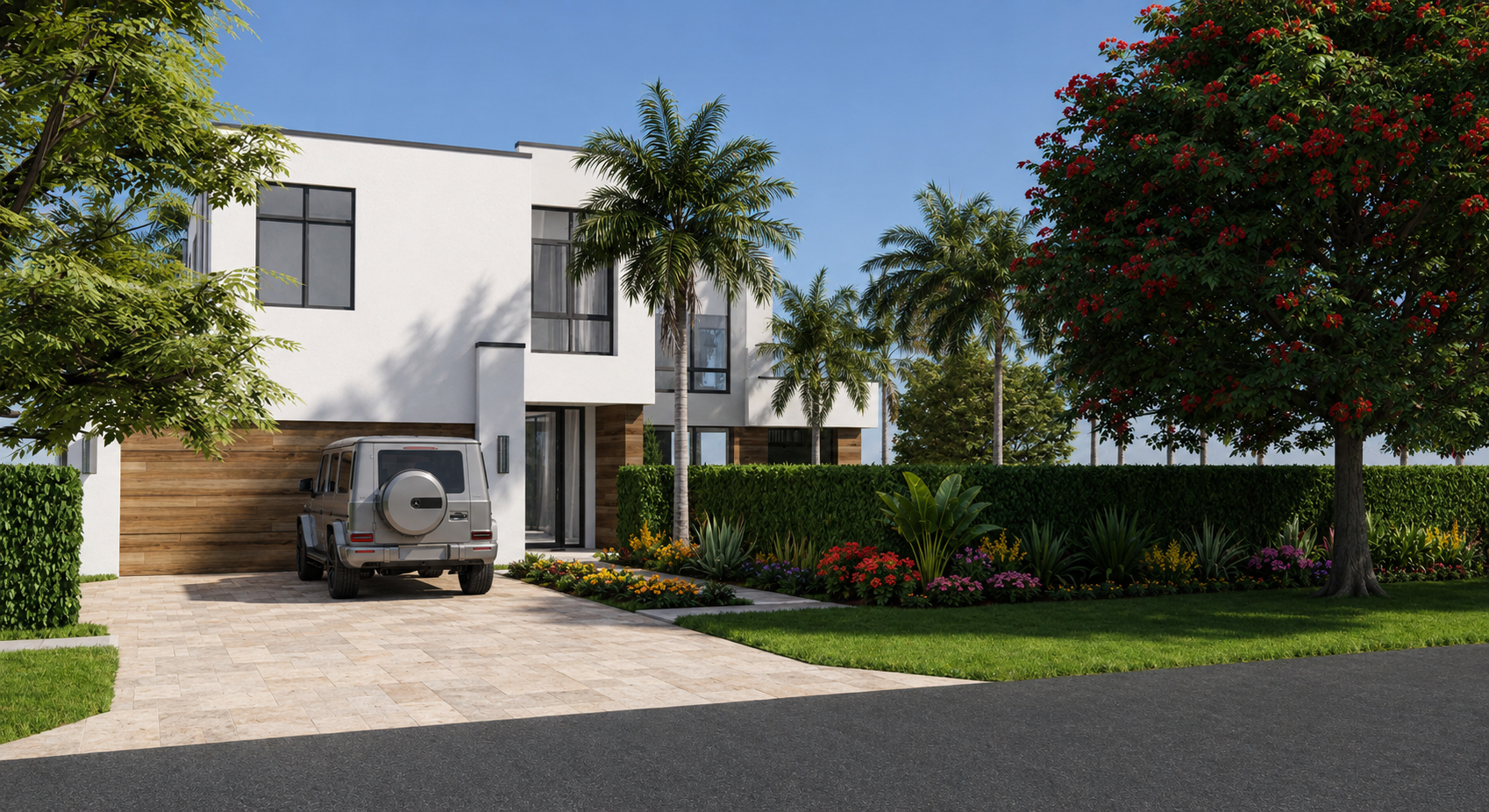
A 3D architectural rendering of a new construction project · North Palm Beach, FL · Interiors by Casa Mia
Design Blog · July 1, 2026 · Jupiter, Florida
You've secured the lot. The architect has the plans. Your builder has a timeline. Everything feels like it's moving and the instinct is to let construction run its course, then bring in an interior designer once there's something to work with.
That instinct is one of the most expensive mistakes you can make in new construction.
The homeowners who get the most out of their new build are the ones who bring their designer in early. Before the concrete is poured, before the electrician runs a wire, before the millwork drawings are finalized. At Interiors by Casa Mia, we're passionate about the new construction process and love to work with homeowners, builders, and architects on new builds where thoughtful design is a priority from day one.
Here's why early designer involvement matters, and what the process looks like when it's done right.
Palm Beach County Is Not A Generic Market
Before getting into the process, it's worth understanding what makes new construction in Jupiter, Palm Beach Gardens, and throughout South Florida distinct from building almost anywhere else.
Palm Beach County is the intersection of coastal, tropical, and quietly luxurious. The indoor-outdoor relationship isn't a design trend; it's the entire point of living here. And the architectural vocabulary ranges from Old Florida and transitional coastal to West Indies and contemporary modernism. And all coexist within a few miles of each other.
Designing well means understanding these realities: which material finishes hold up to humidity and UV exposure over time, how to design the indoor-outdoor connection so it functions beautifully year-round, and how to let natural light work for a space rather than fight it.
The Real Cost of Bringing Your Designer in Too Late
Here's a scenario that plays out on new builds far too often. A homeowner is six months into construction. The framing is up, electrical is roughed in, and they're finally ready to start thinking about interiors. They bring in a designer for the first time.
That first walkthrough surfaces a list of problems: the recessed lights are centered on the ceiling grid, not positioned for how the furniture will actually lay out. The kitchen island plumbing rough-in is two feet from where the final design needs it. There's no blocking in the walls for the floating vanity in the powder bathroom. The primary bath has outlets on the wrong wall for the vanity mirror placement the homeowners want.
Every one of these issues is fixable… but will require mid-construction change orders. And change orders in a Palm Beach County new build market, where labor is tight and timelines are already stretched, are expensive and schedule-killing.
The alternative is bringing your interior designer into the process before any of this is locked in. In the world of construction, efficiency is king.
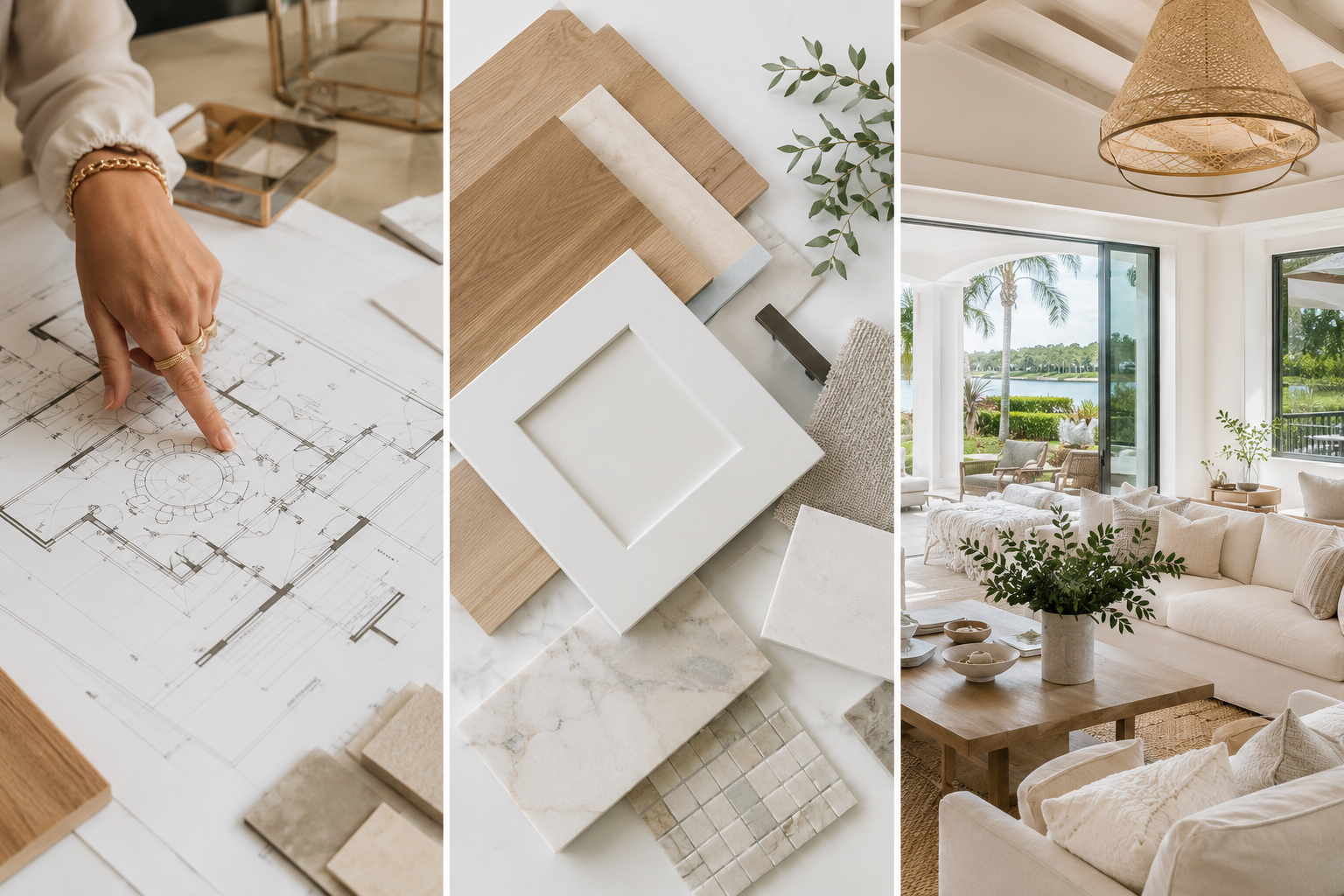
What New Construction Interior Design Actually Looks Like, Phase by Phase
Phase 1 — Pre-Construction: The Decisions That Can't Be Undone
This is the highest-leverage phase of the entire project. During pre-construction, we are reviewing architectural plans with fresh eyes. Not to second-guess the architect, but to translate those drawings into livable space. Where will the sectional actually land in the great room, and does the window placement support that? Is the kitchen island the right proportion for the traffic flow? Are there ceiling conditions — beams, tray ceilings, volume ceilings — that need to be specified before framing is complete?
This phase also covers lighting design. Our lighting plans specify not just where lights go, but what type, at what height, what bulb type, and on which circuits and dimmers. Getting this right before rough-in eliminates one of the most common (and costly) mid-construction pivots.
Other pre-construction decisions that belong here: plumbing rough-in locations based on final fixture choices, blocking locations for future built-ins or floating vanities, and any structural coordination for specialty ceiling conditions or feature walls.
Phase 2 — Mid-Construction: Selections That Drive the Schedule
Once pre-construction process is complete, we start selection process begins. This is where most homeowners feel the scope of the project most acutely. There are hundreds, if not thousands, of decisions to make, many of them interdependent, and many with important lead times.
In our business, lead times aren't abstract. Your builder has a schedule, and certain trades can't proceed until selections are confirmed. Flooring has to be specified before baseboards are cut. Cabinetry (which can run 10 to 16 weeks from order to delivery for custom work) needs to be selected and ordered months before installation. Countertops can't be templated until cabinets are in. Tile has to be on-site before installers are scheduled. A designer who understands this sequencing keeps your project moving. One who doesn't creates a bottleneck that pushes your move-in date.
Typical construction selections include: flooring (wood, tile, stone), all tile work, cabinetry design and finish, countertop material and edge profile, appliance packages, plumbing fixtures and hardware, interior doors and hardware, trim and moldings, paint palette, and any specialty wall finishes or additional millwork details.
Phase 3 — Final Installations: Bringing It to Life
This is the phase most people picture when they think about interior design. Furniture, window treatments, lighting fixtures, art, accessories. The finish-out is what transforms a well-built house into a home.
For new construction interior design in Jupiter, FL, the final installation phase often centers on a few moves: the indoor-outdoor furniture design (which needs to coordinate with the interior palette while standing up to Florida sun and humidity), the window treatments (how to manage the intense Florida light without blocking the views you paid for), and the lighting fixture selections which are the jewelry to top off the new home’s design.
This is also where custom elements like built-in cabinetry, specialty millwork, upholstered pieces made to fit the exact dimensions of a room pay off most visibly. In a new construction, you have the rare opportunity to design furniture that fits the architecture perfectly. That is one of the clearest differences between a designed home and a decorated one.
What Great New Construction Design Actually Requires
Whether you're evaluating us or any other firm, here's what the new construction process genuinely demands from a designer and what we bring to the table.
Process and sequencing knowledge. New construction design is deadline-driven. We know which decisions need to happen first, which selections have the longest lead times, and how to keep the design aligned with the build schedule. This is a different discipline than renovation work, and we take it seriously.
Collaboration with builders and architects. The best new construction outcomes happen when the designer, architect, and builder are communicating clearly from the start, not working in silos. We're committed to that kind of partnership on every project.
Selections depth. A new build requires hundreds of coordinated finish decisions. We bring a thorough, organized selections process and access to trade resources that give our clients options beyond what's available at retail.
A point of view rooted in the place. Jupiter homes should feel like Jupiter, not like they were transplanted from somewhere else. Our design sensibility is shaped by this coastal environment: the light, the materials that belong here, the way indoor and outdoor space should connect.
Start the Conversation Before You Need To
The best time to bring a designer into your new construction project is earlier than feels necessary. Before the permit is pulled, if possible, certainly before rough-in begins, and at the very latest before selections are due, because once that clock starts, it moves fast.
Schedule a complimentary discovery call to talk through your new build.
Interiors by Casa Mia is a full-service interior design studio serving Jupiter, FL, Palm Beach County, and South Florida.
Follow along with our projects at @interiorsbycasamia.